Do You Need Golf Buggy Insurance in the UK?
You have arranged a tee time, loaded your buggy into the car and then the golf club asks to see your insurance certificate. If you were not expecting that question, you are certainly not the only golfer caught out by it. In this guide, we will explain when golf buggy insurance may be legally required, why a club can insist on it and what to check before buying cover.
Is golf buggy insurance legally required in the UK?
There is not one simple yes or no answer for every golf buggy and every place it might be used.
If a buggy is used only on genuinely private land and is not a motor vehicle intended or adapted for road use, the compulsory motor-insurance rules that apply to ordinary cars may not apply in the same way. That does not mean you should assume insurance is unnecessary.
The legal position changes if the vehicle is used on a road or in another public place. GOV.UK's vehicle-insurance guidance says it is illegal to drive a vehicle there without at least third-party insurance. The classification of the vehicle and whether a particular location counts as a public place can matter, so take advice from an appropriate insurer if there is any uncertainty.
A standard golf-course buggy should not be taken onto the road simply because it has insurance. Road use can also involve registration, licensing, construction and driver requirements. Our separate guide explains whether you can drive a golf buggy on the road.
Your golf club may require insurance anyway
Even where compulsory road insurance does not apply, a golf club can make suitable insurance a condition of using your own buggy on its course.
That is common because a powered buggy can injure another person, damage property or cause expensive damage to the course. Clubs have a duty to manage those risks and may ask you to sign a buggy-use form as well as provide proof of cover.
Do not assume your golf membership automatically protects you. England Golf's member insurance information states that its public-liability policy does not cover liability arising from the use of golf buggies. Individual arrangements can change, so check the current policy rather than relying on what another member was told.
Requirements also vary between clubs. Some ask only for third-party liability cover. Others want a particular level of cover, an annual certificate or confirmation that the buggy is properly maintained. Ask before visiting, especially if you are taking your own buggy to a different course or competition.
What should golf buggy insurance cover?
Policies are not all the same. We would begin with third-party liability, which may respond if your use of the buggy causes injury to someone else or damage to their property. This is often the part a golf club is most interested in seeing.
Depending on the value of your buggy and how you use it, you may also want to ask about:
- Accidental damage to the buggy itself.
- Theft from your home, garage, vehicle or golf club.
- Damage while the buggy is being transported.
- Fire, vandalism and weather damage.
- Use at more than one golf course.
- Cover for every person who may drive it.
- Batteries, chargers and fitted accessories.
- Temporary replacement or recovery costs after an incident.
Check the excess as well as the headline limit. A policy can look generous until you see how much you would have to contribute to a smaller claim.
Will home, car or normal golf insurance cover it?
Possibly in a limited situation, but never assume it will.
Home insurance might cover theft from a locked garage yet exclude the buggy once it is being driven. Car insurance may not cover a buggy merely because it is carried inside your vehicle or on a trailer. A general golf policy may protect your clubs and personal liability while playing but specifically exclude powered buggies.
The safest approach is to describe the buggy accurately and ask the insurer direct questions. Tell them it is a powered single-seat golf buggy, where it will be stored, how it will be transported and where it will be driven. Ask for the answer in writing and check that the certificate satisfies your club's policy.
Questions to ask before choosing a policy
An inexpensive policy is not good value if it leaves out the cover you actually need. Before agreeing to anything, ask:
- Does the policy cover a personally owned, single-seat electric golf buggy?
- Is third-party liability included, and what is the limit?
- Is the buggy covered at every UK golf club or only a named course?
- Does cover continue while it is stored or transported?
- Are theft and accidental damage included?
- Are the battery, charger and accessories covered?
- Can another named person drive the buggy?
- Are there age, medical, security or maintenance conditions?
- What evidence will be needed if you make a claim?
Read the exclusions rather than relying on the summary page. If anything is unclear, ask the insurer or broker to explain it before you pay.
What proof might the golf club request?
A club may ask for a current certificate showing the policyholder, insured buggy, period of cover and third-party liability limit. It may also ask you to sign an acknowledgement confirming that you will follow its buggy policy and designated routes.
Keep a digital copy on your phone and take a paper copy when visiting a course for the first time. Check the renewal date before the start of the season. Turning up with an expired document can be enough for the club to refuse permission that day.
Insurance does not replace the club's approval. You still need to check its rules, current course conditions and any restrictions on personal buggies. Our guide to using your own golf buggy at a golf club covers those practical steps.
Our view on insuring a personal golf buggy
Even when a buggy is used only on private course land, we think suitable third-party cover is a sensible starting point. A minor lapse in concentration can damage another buggy, a parked car or club property, and the financial consequences can be far greater than the cost of a policy.
Owners should also consider theft, accidental damage and transport cover according to the value of the buggy and how often it travels. The right policy is the one that matches your real use, not simply the cheapest result online.
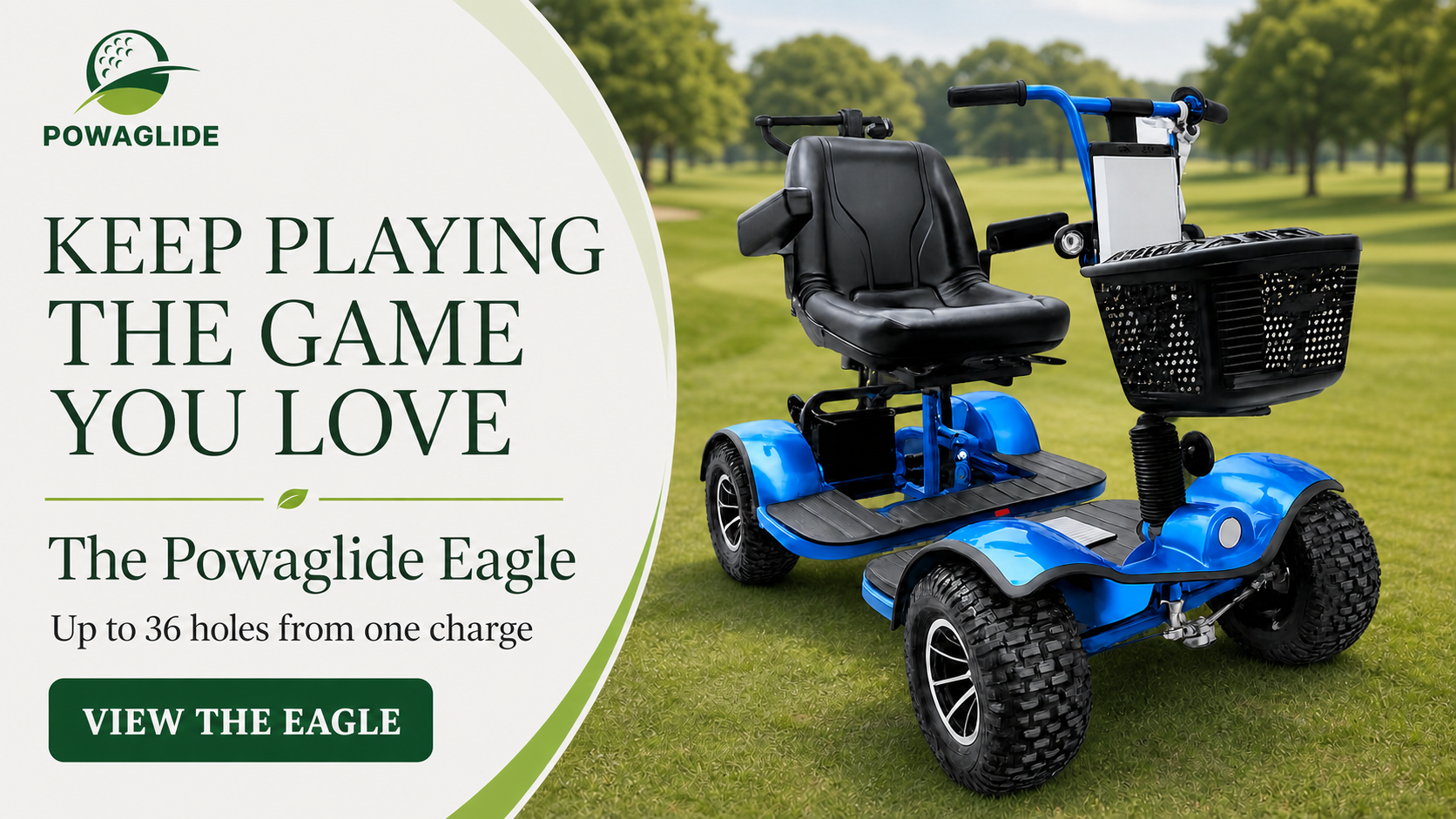
If you are considering a Powaglide Eagle single-seat golf buggy, speak to your club and insurer before your first round. Confirm where you can use it, what insurance evidence the club wants and who is permitted to drive. For advice about the Eagle itself, call us on 07787 533333 or arrange a test drive.
This article provides general information, not legal or insurance advice. Policy terms, club rules and individual circumstances vary, so confirm the position with your club and a suitable insurer.